
On this page
- Which trees matter around Pasadena?
- What does each tree do to gutters?
- How do storms turn trees into a gutter problem?
- What problems follow a clog?
- What fixes actually work?
- Which guards fail under oaks and pines?
- Should you remove trees near the house?
- What should a quote for a tree-heavy lot include?
- How do falling limbs damage gutters?
- How should gutters be set up on tree-heavy lots?
- What about roof valleys?
- When do local trees drop the most?
- How does pollen affect gutters?
- What should you ask an arborist versus a gutter contractor?
- Should you trim trees before new gutters go up?
- Next steps
Which trees matter around Pasadena?
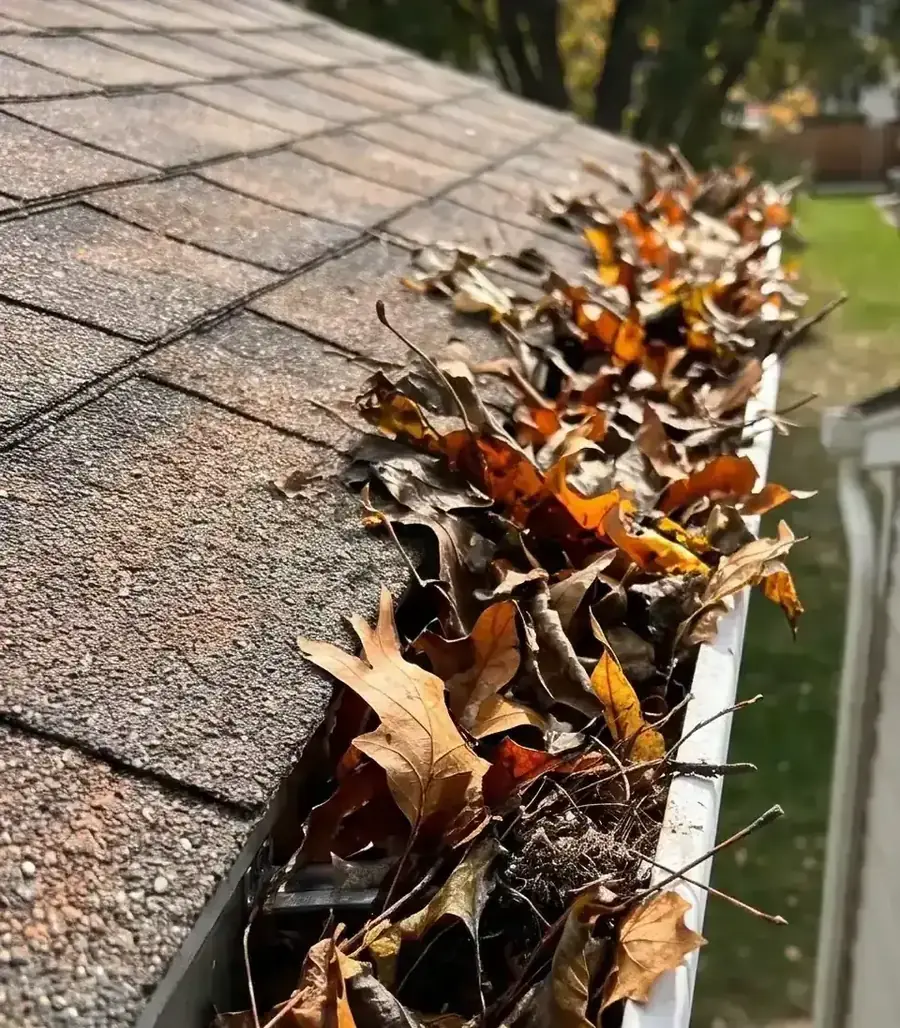
The Houston region's forest survey found loblolly pine to be the most common native tree, at about 19 percent, with oaks at about 15 percent. In Pasadena and the Bay Area, live oaks, water and laurel oaks, pecans, pines and sweetgums are common in older yards. League City still has rows of live oaks that were brought in on two railroad flatcars and planted along Main Street in 1907.
What does each tree do to gutters?
| Tree | Debris | Problem |
|---|---|---|
| Live oak | Leaves and catkins, mostly in late winter | Mats outlets; rots to sludge |
| Water and laurel oak | Leaves, acorns, twigs | Weight and blocked outlets |
| Loblolly pine | 6- to 9-inch needles | Slip through screens, bridge outlets |
| Pecan | Leaves, husks, twigs | Heavy autumn drop |
| Sweetgum | Seed balls | Jam downspout elbows |
How do storms turn trees into a gutter problem?
Limbs. The Greater Houston Partnership described Hurricane Beryl as primarily a wind event, with most damage from fallen trees, and the Texas A&M Forest Service estimated it affected about half of Houston's urban tree cover. The 2024 derecho and the 2023 tornado also brought trees and branches down across the area. A limb landing on the roof edge crushes runs, bends hangers and tears off downspouts.
What problems follow a clog?
| Problem | Why it happens |
|---|---|
| Overflow in every storm | Outlet blocked by a leaf or needle mat |
| Sagging | Soaked debris adds weight |
| Rotten fascia | Overflow keeps the wood wet in humid air |
| Mildew and stains | Water spilling down brick |
| Wet soil by the slab | Overflow lands in one strip |
What fixes actually work?
Micro-mesh guards. Fine stainless mesh keeps catkins, needles and leaves on top. See micro-mesh guards.
Bigger outlets. 3x4 downspouts let debris wash through; standard on 6-inch gutters.
More outlets. An outlet at each end of a long run halves the debris each one sees.
Heavier coil. .032-inch aluminum resists dents from small limbs.
Trimming. Cutting branches back from the roof edge reduces debris and storm risk. Larger tree work is a job for an arborist.
Timing. Clean after the late-winter oak drop and before hurricane season.
Which guards fail under oaks and pines?
| Guard | Problem |
|---|---|
| Perforated screen | Catkins and needles slide through |
| Foam insert | Debris sticks into the foam |
| Brush insert | Debris tangles in the bristles |
| Reverse-curve cover | Small debris slips into the slot |
Should you remove trees near the house?
That decision involves shade, cooling, property value, cost and storm risk. Many owners keep their trees and manage debris with guards and cleaning. Have a certified arborist check any tree that is dead, leaning or hanging heavily over the roof.
What should a quote for a tree-heavy lot include?
- Cleaning of gutters, downspouts and roof valleys.
- Outlet upsizing to 3x4.
- Extra outlets on long runs.
- Guard type, brand and mesh material.
- Fascia repairs found during the work.
How do falling limbs damage gutters?
A limb landing on the roof edge does three things: it crushes or kinks the run, it bends or tears out hangers, and it can split the fascia behind. Downspouts get flattened at the bottom or torn from the wall. Some damage is obvious; a slight kink that now holds water may only show in the next storm.
How should gutters be set up on tree-heavy lots?
| Feature | Why |
|---|---|
| Heavier .032-inch coil | Resists dents from small limbs |
| Hidden hangers about every two feet | Holds weight of wet debris |
| 3x4 downspouts | Pass leaves and twigs |
| Micro-mesh guards | Keep catkins and needles out |
| Extra outlets on long runs | Halve the debris each outlet sees |
What about roof valleys?
Leaves collect in valleys and behind chimneys, hold moisture against the shingles and then wash into the gutter in a storm. Under big oaks, clearing the valleys is part of a proper cleaning. Leave roof work on steep or two-storey roofs to a professional.
When do local trees drop the most?
| Season | Debris |
|---|---|
| Late winter | Live oak leaves and catkins |
| Spring | Oak and pine pollen |
| Summer and fall | Storm debris; pecan leaves and husks in autumn |
| Winter | Sweetgum balls |
How does pollen affect gutters?
In spring, oak and pine pollen coats roofs and gutters. In the trough it mixes with water into a sludge that settles in low spots and can film micro-mesh guards. A rinse clears it. It is a seasonal nuisance, not a cause of serious clogs.
What should you ask an arborist versus a gutter contractor?
An arborist decides whether a tree is healthy, how to prune it and whether it poses a risk to the house. A gutter contractor decides how to keep the gutters working under it. For big trees over the roof, it is worth talking to both.
Should you trim trees before new gutters go up?
It helps. Trimming branches back from the roof edge first means the new gutters start clean and the crew has room to work. It also reduces the chance of limbs damaging the new system in the next storm.