
On this page
- What have recent storms done around Pasadena?
- What is the pre-season checklist?
- How should gutters be hung for wind?
- What should you do when a storm is forecast?
- What about the rain itself?
- What should you do after a storm?
- Does insurance cover gutter damage?
- Should guards come off before a hurricane?
- Why do gutters fail at the ends?
- What about power lines near gutters?
- How do you avoid storm-chasing contractors?
- What should you check after hurricane season ends?
- Are gutters a risk as flying debris?
- Should downspout extensions be removed before a storm?
- Next steps
What have recent storms done around Pasadena?
- Hurricane Beryl, July 8, 2024. A Category 1 landfall at Matagorda; mostly a wind event, with maximum sustained winds of 80 mph and most damage from fallen trees and lines. Beryl cut power to about 2.7 million Texas homes.
- Hurricane Harvey, August 2017. Harvey stalled over the region. Deer Park, next to Pasadena, recorded 30 to 50 inches of rain.
- Hurricane Ike, September 2008. Winds lasted upwards of nine hours and about 90 percent of the Houston area lost power. In bayside Seabrook, surge cut off streets and some residents went a month without power and water.
Gutters cannot be made hurricane-proof. They can be made far less likely to come loose, spill water against the house or become debris.
What is the pre-season checklist?
Do this in April or May, before June 1.
| Task | Why |
|---|---|
| Clear gutters and downspouts | Full gutters overflow and add weight |
| Flush buried lines | Blocked lines back water up at the house |
| Check hangers | Loose spikes let wind peel runs off |
| Check end caps and corners | Ends are where wind gets a grip |
| Re-strap downspouts | Loose downspouts tear off first |
| Probe fascia | Soft wood lets a whole run pull away |
| Check guard fasteners | Loose guards lift and blow off |
| Extend discharge from the slab | Heavy rain needs somewhere to go |
| Trim branches back from the roof | Limbs crush gutters |
How should gutters be hung for wind?
- Hidden hangers about every two feet, screwed into sound wood.
- A hanger near every end and corner.
- Riveted, sealed end caps.
- Downspouts strapped at top, middle and bottom.
- Heavier .032-inch aluminum under big trees.
If the gutters sag or the fascia is soft, fix it before the season. See sagging gutters and fascia and soffit repair.
What should you do when a storm is forecast?
| Timing | Task |
|---|---|
| Several days out | Clear gutters and downspouts; secure loose sections |
| A day or two out | Lower flip-up extensions; move bins away from downspouts |
| Just before | Stay off ladders and roofs |
| During | Stay inside; note where water overflows |
| After | Inspect from the ground; photograph damage |
What about the rain itself?
A tropical storm can drop several inches in a day. No gutter handles that without spilling, but clear outlets, large downspouts and discharge away from the slab keep the worst off the foundation. The Harris County Flood Control District notes that many homes flood from localized ponding. See gutters and yard flooding.
What should you do after a storm?
- Stay safe. Keep clear of downed lines; call 911 if one is down.
- Photograph damage from the ground before anything is moved.
- Report significant damage to your insurer.
- Get a written inspection and quote.
- Choose carefully. The Texas Department of Insurance advises hiring locally and getting written bids, lists scam warning signs, and notes it is illegal for a contractor to waive your deductible.
Does insurance cover gutter damage?
Wind and falling-limb damage is often covered, subject to the deductible. Wear, rust and clogs usually are not. Your policy and adjuster decide.
Should guards come off before a hurricane?
No. Well-fastened guards keep storm debris out of the gutter. If a section is already loose, screw it down or remove it before the storm rather than leaving it to blow off.
Why do gutters fail at the ends?
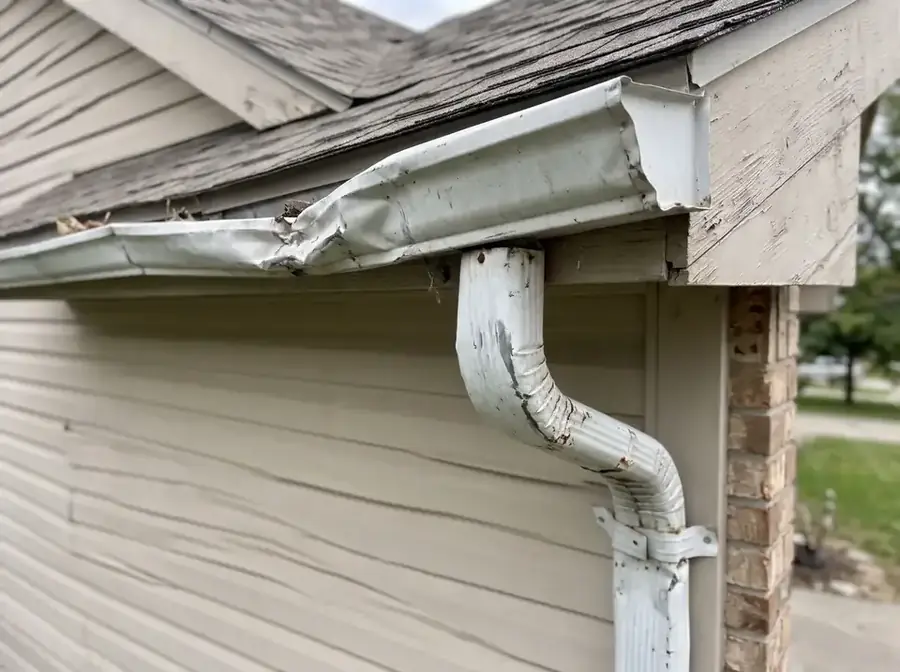
Wind lifts a gutter where it can get under it, usually at an end cap or corner. If the last hanger is far from the end, the gutter acts like a lever. A hanger within a few inches of every end and corner, and end caps riveted rather than just pressed on, make a big difference.
What about power lines near gutters?
Service lines often run to a corner of the house near a gutter. After a storm, never touch a gutter or downspout in contact with a downed or sagging line. Call 911 or the utility and keep clear. After Beryl, power was out for about 2.7 million Texas homes, and downed lines were a hazard across the region.
How do you avoid storm-chasing contractors?
After big storms, out-of-area contractors often go door to door. Warning signs include pressure to sign on the spot, large up-front payments, offers to cover your deductible and no local address. The Texas Department of Insurance lists these and other contractor scam signs. Check references and get written bids.
What should you check after hurricane season ends?
In late November or December, walk the house once more. Look for bent runs, opened corners and loose downspouts left by fall storms, and clear any debris. Book repairs during the drier, quieter months so the system is ready before next June.
Are gutters a risk as flying debris?
Loose sections can be. That is why securing or removing any detached piece before a storm matters.
Should downspout extensions be removed before a storm?
Flip-up extensions should be lowered so water flows away from the house; loose extensions that could blow away should be secured.